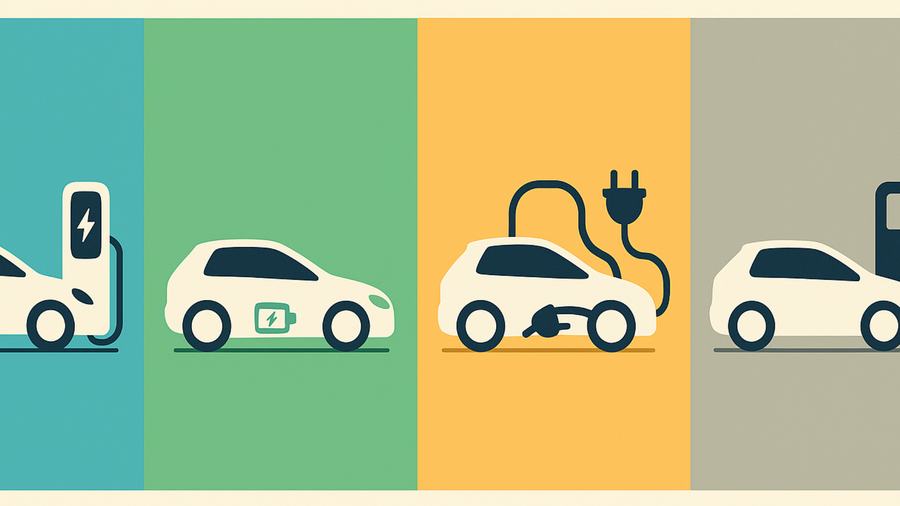
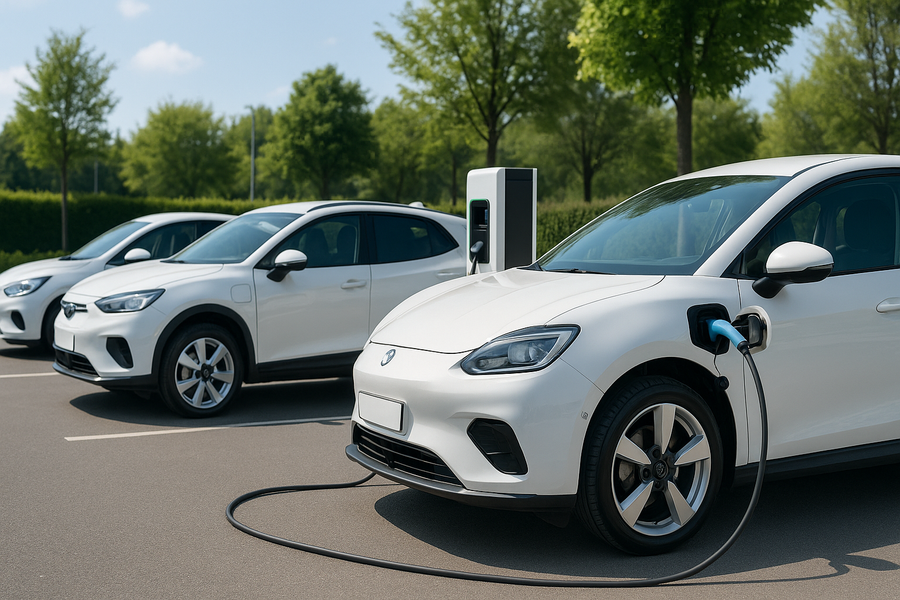

Welcome to the world of electromobility! When you your Load the electric car Would you like to have two options: comfortable shop at home or flexible Shop on the way. But how do these types of loading differ? In this article you will learn how to load your electric car on the home Power outlet or Wall box works and what you do in public Charging station and Fast charging stations expected. We'll take a look at loading times E-car electricity costs in comparison as well as advantages and disadvantages of both variants. We also give you practical tips, so that Load the electric car Runs stress -free from the start. Have fun reading!
Load zUhaus: Socket vs. Wallbox
Loading at home has an unbeatable advantage: you can simply “refuel” your electric car overnight whenever it is. There are two main opportunities to supply your electric car with electricity at home - on the normal householdpower outlet or with your own Wall box. But be careful: these two differ significantly in speed and security.
The normal socket - emergency solution for patient
Yes, you can Load your electric car on an ordinary 230-volt socket. Simply take the included emergency charging cable (also called "Schuko" adapter) and off you go. The big catch: the loadingspeed. A household socket delivers a maximum of about 2.3 kW of power - that is very slowly. Depending on the battery size of your car, a full load can over 24 hours last! For plug-in hybrids with a small battery, this may still work, but a pure e-car overnight is difficult on the Schuko can. In addition, there is a permanent store at the border of the socket interpretation Security risk (Keyword: overheating). Conclusion: The socket is at most suitable as a emergency solution or for low loading hardships. If you use them, it is best only occasionally, under supervision and without an extension cable - and do not expect a miracle in terms of speed.
The Wallbox-your private “petrol stations” replacement
Significantly more comfortable for Load the electric car At home is one Wall box. This is a permanently installed charging station for home, mostly with 11 KW Load capacity (one -phase 3.7 kW or even 22 kW are also possible, but 11 kW has established itself as the standard). A wall box loads your electric car with it up to 5-10 times faster As the socket. A typical electric car battery (e.g. ~ 50 kWh) is in approx. 5 hours Full again - compared to over 20 hours on the Schuko! In addition to the speed, the Wallbox offers more Security (Internal fuses, no overheating) and often smart extras. For example, you can program loading times (practically with night current/photovoltaic) or check the charging level via app. The installation of a wall box initially costs money - depending on the model and effort, for example 1.000–2.500 € (Device + electrician). Until recently there was even one Financial support of € 900 per wallbox, which is now exhausted (as of 2025). However, some cities and energy suppliers offer a few subsidies - information is worthwhile! Despite the investment, a wall box usually pays off: your house current costs significantly less than public electricity, and the comfort is unbeatable. Tip: If you live for rent, i.e. with your landlord - you are legally entitled to install a charging option (but you bear the costs). The bottom line is that a wall box does that shop at home To the uncomplicated standard - plug it in, go to sleep and drive off with a full battery in the morning.
Load advantages at home: Electricity from the home network is usually the cheapest and you invite you when it suits you. You are independent of public stations and start with full battery every day. With your own PV system, it gets even better: you can almost load your car with a solar power to zero tariff. There are hardly any disadvantages - at most the acquisition costs of the wall box and that not everyone (e.g. in a rental apartment without a parking lot) has the opportunity.
Load on the way: public charging stations and quick loaders
On the way it comes Load the electric car Also without a question into play - especially on long distances or if you don't have a home charging option. Public Charging station You can now find almost everywhere: in the city, in supermarket parking spaces, at rest areas or in parking garages. Basically, we differentiate between two categories: AC shop (Wechselstrom) und DC shop (DC). But what does that mean?
AC vs. DC - what is behind it?
AC shop (AC) uses one normal loading connection (type 2) and takes place at most public charging stations that are up to 22 KW afford. Here your car converts the alternating current using an on -board loader into direct current for the battery. DC shop (DC), on the other hand, puts the current directly into the battery as a direct current - with significantly higher performance. Fast charging stations (also High Power Charger named) Working with DC and creating today depending on the station 50 kW to 300+ kW. Your car communicates with the charging station and regulates the load flow, so that the battery can absorb a lot of energy in a very short time. The result: Rapid shop Go rapidly-typically you load your electric car in ~ 20–30 minutes 80 % Full (the last rest to 100% loading takes longer for the DC shop, so you often hear “on 80% shop is optimal”). AC shop on public columns, on the other hand, is rather cozy - Depending on the vehicle (most shop AC AC), you need a few hours for a noteworthy load. Therefore, you use AC charging stations on the go for destination charging (e.g. while you park in the cinema, office or overnight in the hotel). DC quick loader are the choice for the highway and long trips if it should go on quickly.
Provider and network: Tesla Supercharger, Ionity & Co.
Public charging points are from different Providers operated, and their offers differ slightly. Some examples: The Tesla-Supercharger-Netz is world famous-placed strategically on motorways, high reliability and optimally integrated for Tesla drivers (simply infect, the charging process starts automatically and is billed via the Tesla account). In the meantime, Tesla also opens many superchargers for third-party brands, which non-tesla drivers Rapid-Hepspot. Ionity Again, a joint project of several car manufacturers and offers ultra -fast charging stations up to 350 kW on European main traffic routes. Here you pay the most without a contract with the most - up to ~ € 0.79 per kWh - unless you use special tariff models (e.g. via membership). In addition, there are chargers of large energy suppliers such as EnBW (Hypernetz in Germany) or mineral oil companies such as Aral pulse, Shell Akarge and much more, these offer both AC and DC loaders. In everyday life you will probably be one App or Charging card Use a provider that gives you access to many of these stations (thanks to Roaming, you don't have to have your own card for each operator). Important to know: Depending on the column, you can pay via the app, RFID card or sometimes even contactless with a credit card (new stations from 2023 often have card terminals). Tip: For the beginning, the tariff of EnBW/ADAC is worthwhile because it covers a large network and offers comparatively cheap KWH prices. So it gets Shop on the way Not to the tariff trap.
Load the advantages on the go: You are flexible and can cover long distances by simply planning a load stop. Modernity Fast charging stations are good for hundreds of kilometers in 20-30 minutes. You also discover new places on the way - many charging parks offer coffee, snacks or shops for "charging". Disadvantages: The electricity is more expensive than at home and you rely on the availability of functioning columns. There can also be waiting times on public holidays or with great crowds. Nevertheless, the charging network becomes more and more denser, and with a little planning you can easily get anywhere.
Comparison of costs: zUhause vs. Load on the go
Now butter at the fish - what does that cost you Load the electric car On average at home versus at public stations? Basically is Budgetary current Almost always cheaper per kilowatt hour than public shops, where operators still hit infrastructure and service. To classify a small comparison of the Electricity costs and loading times:
|
Place of charge |
Ø electricity costs per kWh |
Time for ~ 50kWh (0–100%)* |
|---|---|---|
|
At home (Wallbox) |
approx. 0,30 € (House tariff) |
~ 5 hours (11 kW) |
|
At home (Power outlet) |
approx. 0,30 € (House tariff) |
> 24 hours (2.3 kW) |
|
On the way AC |
approx. 0,40 € (0,35–0,50 €) |
~ 3–8 hours (up to 22 kW) ** |
|
On the way DC |
approx. 0,70 € (0,50–0,80 €) |
~ 20–40 minutes (50–150 kW) ** |
*At ~ 15 kWh/100 km consumption, 50 kWh corresponds to around 333 km range. - A notice: Prices vary depending on the provider and tariff. With special charging cards or subscriptions, you can often load cheaper on the go (e.g. ~ 0.55 €/kWh at EnBW with a monthly package). Depending on the contract, home current can be between ~ 0.25 and € 0.40/kWh.
You can see clearly: Shop at home protects the wallet - that E-car electricity costs Roughly per 100 km are € 4–5 €, while 100 km of quick charging can cost you around € 10. For this you naturally get energy on the highway in 20 minutes, for which the wall box takes almost 5 hours. So it is a weighing up between costs and time. Many e-car drivers combine both: cheap in everyday life at home Load and only on longer tours the more expensive Quick loader to use. This is how the budget is within the framework.
Practical tips for beginners at Load the electric car
The switch to an electric car is exciting, but don't worry-shop needs to be learned, but quickly turns into flesh and blood. With these tips you avoid typical beginner errors:
-
Not always 100% load: Your battery feels most comfortable between ~ 20% and 80% charging. Better load in everyday life more often and not to the stop. This protects the battery and saves time because the last 20% very Slowly load - especially on fast loaders.
-
Cabbage do not drive empty: Plan to recharge in time so that you do not stay with almost 0%. Under ~ 10–15% rest, it should go to the charging station. Modern electric cars warn you early enough and pilot you to the next Charging station, so listen to your "fuel client".
-
Suitable charging equipment: Pay attention to well -kept Loading. Keep your charging cable clean and dry - dirt or moisture on the connector can lead to problems. For public AC pillars you usually need your own type 2 cable: this should not be missing in any electric car! (In our shop you can find that e.g. 2befair charging cable - Made robust and sustainable.)
-
Use loading apps: Install one or two good ones Apps For charging station search-e.g. “EnBW Mobility+” or “Chargemap”. You can find free columns, can check availability and often pay for it. So you are not at a loss in front of an unknown charging station.
-
Compare loading tariffs: Register with a loading tariff that covers many stations and offers fair prices. Paying ad hoc directly on the column is often the most expensive. For example, the ADAC/EnBW Tariff because you load more cheaply with many providers. A little planning saves money here.
-
Plan cleverly on loading breaks: The following applies on longer trips: Planning is everything. Use the route planner function of your car (if available-Tesla e.g. Plans Supercharger stops automatically) or an app like “A Better Route Planner”. So you know beforehand when and where you will load. Tip: Load breaks can be used for a coffee break, meal or toilet stop - then it feels Load the electric car twice productive. 😉
-
Not too much stress: At the beginning, the loading topic may look complex, but don't worry-you will quickly develop routine. Try the public shop nearby before you go on a big trip. So you learn in a relaxed environment how it works with the cable, the charging card and starting the charging process. The second, third time, it's as easy as refueling.
With these tips you are well equipped and become a loading professional before you show yourself.
Conclusion: The mix does it - and preparation is King
Load the electric car Is half as wild as many think at the beginning. At home You benefit from cheap prices and maximum comfort - the Wall box At home quickly becomes a favorite accessory because it almost makes your electric car full. Load on the way allows you to explore the world beyond the city limits, and thanks to more and more Fast charging stations You can move quickly on long distances. The best solution is often a mix: use shopping for everyday life and the fast loaders for the big ride. So you save money and time at the same time.
Finally, our advice for new e-car drivers: Dear yourself calmly and try out different charging situations. With a little practice, the shop becomes a minor matter - and you simply enjoy the quiet, electric ride. If you still need accessories to equip yourself perfectly, have a look at us: a high -quality charging cable (e.g. from our 2 -bed) or a mobile charger can be worth gold. At Shop4tesla we have a lot in stock - of course without wanting to talk you up. 😉
Our charging tip: Stay flexible, plan ahead and don't let yourself be driven crazy. Regardless of whether shop at home At your own wall box or Shop on the way on the fast loader - you will see Load the electric car It works smoothly almost everywhere. In this sense: always enough electricity in the battery and a good trip!